Paper Trails and Gold Threads: Inside the Documentation Revolution Reshaping How Americans Buy Fine Jewelry
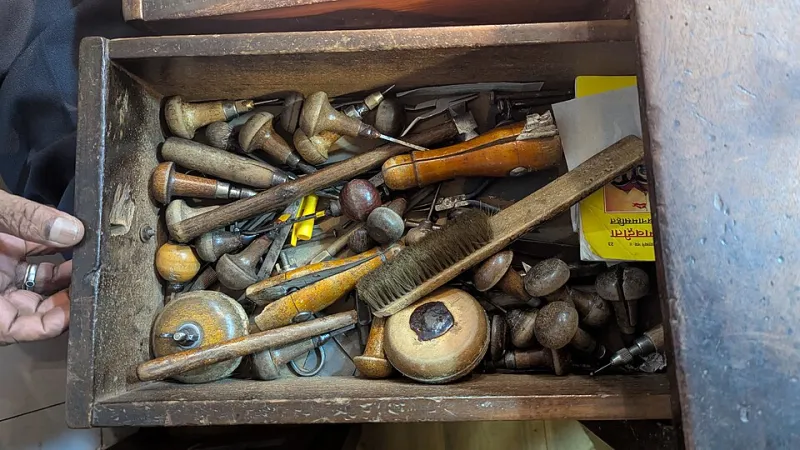
Photo: SerChevalerie, CC0, via Wikimedia Commons
There was a time when a receipt was enough. A certificate of authenticity, perhaps, tucked into a velvet box alongside a pair of diamond studs. But walk into any serious jewelry conversation in New York, Los Angeles, or Dallas today, and you will hear a different question entirely: not what is it, but where has it been?
Provenance—the documented journey of a piece from raw material to finished object—has quietly become the defining expectation of the discerning American buyer. And nowhere is that expectation being met with more rigor, or more romance, than in the ateliers of Dubai.
From the Souk to the Spreadsheet
Dubai's Deira Gold Souk has traded in precious metal for generations, its vitrines heavy with gold whose origins were once a matter of trust rather than record. The new generation of Gulf ateliers, JADA among them, has inverted that tradition. Every gram of metal sourced for a JADA commission is logged—refiner, region, date. Every stone carries documentation of its journey through the trade.
The result is something mass-market luxury simply cannot manufacture at scale: a complete biography of an object. When an American client receives a JADA piece, she receives alongside it a paper trail that reads less like an invoice and more like a travelogue—gold that passed through the souk's labyrinthine corridors, a stone cut by a named cutter, a setting executed at a specific bench by hands that signed their work.
Why Traceability Became Table Stakes
The shift is not merely aesthetic. American consumers—particularly the affluent, millennial and Gen X cohort driving much of the fine jewelry market's growth—have been trained by a decade of transparency movements in wine, coffee, and fashion to expect narrative with their purchases. A 2023 industry survey found that a majority of luxury buyers under fifty consider ethical sourcing documentation a deciding factor in major purchases, up dramatically from even five years ago.
But provenance in the Gulf context offers something beyond ethics: specificity. A chain from a department store comes with a country of origin, at best. A JADA piece comes with a geography of craft—the souk, the workshop in Al Quoz, the goldsmith whose family has worked metal for three generations. That granularity is precisely what large houses, with their globalized supply chains, struggle to provide.
The Artisan's Signature
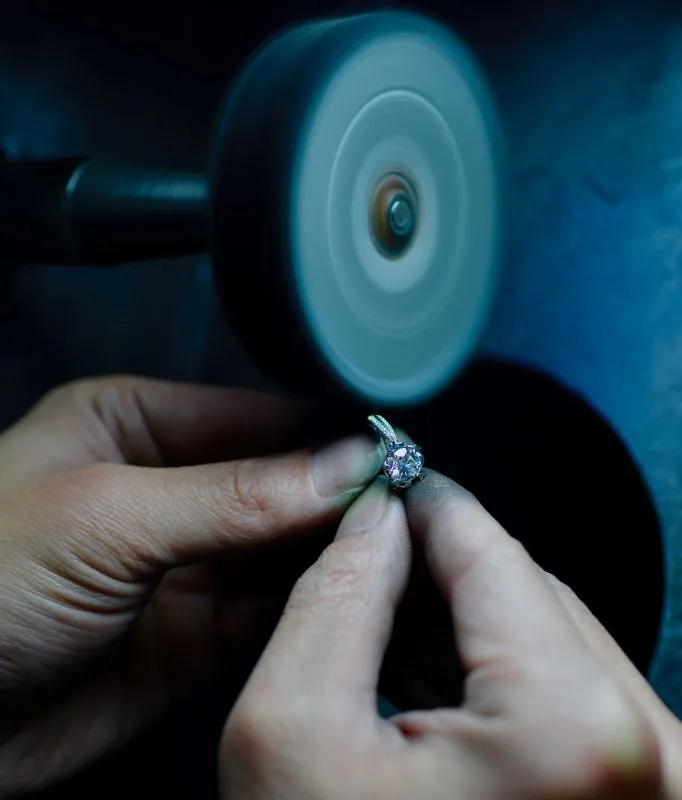
Consider what happens at the bench. In Dubai's workshops, a single piece may pass through the hands of a model-maker, a stone-setter, and a polisher—each a specialist, each leaving an identifiable mark on the finished work. JADA's documentation practices record these handoffs. The client knows not just that her ring was handmade, but whose hands made it.
This is a return to an older model of luxury, one that predates the logo. In the great jewelry houses of the early twentieth century, the maison's value lay in its workshops—named craftsmen whose skills were the brand. Provenance documentation restores that relationship, making the invisible visible.
A Story Worth Passing Down
For American buyers, the appeal is ultimately generational. An heirloom without a story is merely an asset; an heirloom with documented provenance is an inheritance in the fullest sense. When a JADA piece is passed from mother to daughter in Chicago or Houston, it arrives with its biography intact—the souk, the bench, the names.
The certificate, in other words, is not paperwork. It is the first chapter of the piece's second life.
What to Ask Before You Buy
For those evaluating provenance-driven purchases, the questions are simple:
- Where was the metal refined, and by whom?
- Can the atelier name the artisans involved?
- Is the documentation transferable—does it travel with the piece?
- What can the seller tell you about the workshop itself?
If the answers are vague, the story likely is too. If the answers name places, people, and dates, you are not merely buying jewelry. You are acquiring a narrative with a gold clasp.
In an age when luxury has never been more widely counterfeited—both materially and spiritually—the paper trail has become the true mark of the genuine article. Dubai's ateliers understood this early. American collectors are catching on quickly.