Amber in the Air: The Gulf Ritual of Perfumed Gold—and How to Recreate It at Home
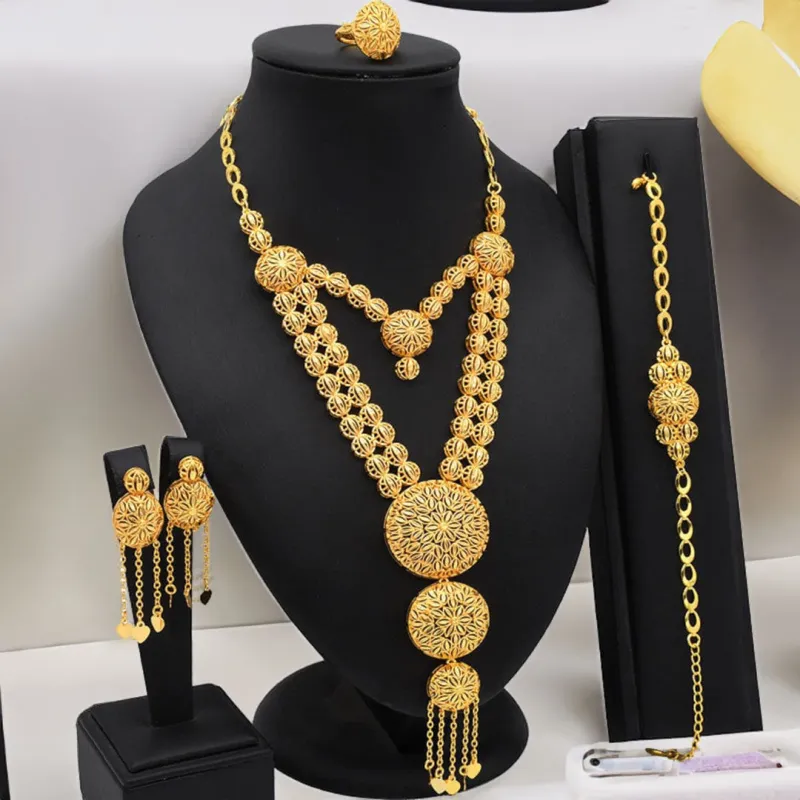
Photo: luxury gold jewelry unboxing with oud incense and rose petals Dubai, via i.etsystatic.com
Ask any American who has wandered the gold souks of Deira what they remember, and the answer is rarely the karat stamps or the window displays. It is the smell. Somewhere between the wood of the shop counters and the velvet-lined trays, the air carries something unmistakable: oud, thick and resinous; amber, warm as late-afternoon sun; rose, but not the shy rose of a department-store counter—something darker, older, more deliberate.
This is not an accident of atmosphere. It is a practice.
Gold Is Never Presented Alone
Across the Gulf, the relationship between precious metal and precious scent is centuries deep. Pearl divers once carried small vessels of perfume on their boats, believing fragrance protected both body and fortune. Traders in the old souks would scent the linens on which gold was displayed, and bridal trousseaus across the Emirates were assembled with jewelry wrapped in cloth that had been perfumed—sometimes for months—so that a necklace lifted from its wrapping announced itself before it was seen.
The logic is elegant: if gold is meant to endure generations, then the moment of its giving should be as considered as the object itself. The unboxing is not logistics. It is theater, and the scent is the overture.
Why the Fifth Avenue Box Feels Different
There is nothing wrong with the American jewelry box—crisp, quiet, tastefully monogrammed. But it is designed to disappear. The Gulf tradition asks the opposite of its packaging: that it linger, that it participate.
At JADA, every commissioned piece is prepared the way it would be presented in a Dubai majlis. The tissue is scented days in advance, never sprayed at the last moment—oud needs time to settle into paper and fabric rather than sit atop it. Sandalwood chests or lined cases replace the standard hinged box. A small vial of the house blend accompanies certain pieces, so that the ritual can be renewed each time the jewelry is worn or stored.
American clients often tell us the arrival of their commission felt less like receiving a parcel and more like opening a letter from someone who knew them. That is not marketing. That is intent.
The Majlis Moment: A Guide for the American Collector
You do not need a Dubai address to honor the tradition. You need roughly twenty minutes and a willingness to slow down. Here is the ritual as we teach it:
1. Choose your hour. In the Gulf, jewelry is presented in the evening, when the day's heat has lifted and the light turns honeyed. Open your piece at dusk, by lamplight rather than overhead lighting.
2. Prepare the room before the parcel. Burn a stick of oud or a candle of amber and rose fifteen minutes ahead. The room should be scented before the jewelry enters it—arrival, after all, is the point.
3. Clear a surface of consequence. A polished table, a linen runner, a single bloom. The majlis is a place of welcome; your staging should welcome the piece the way you would a guest.
4. Unwrap in stages. Remove the outer layer, pause. Remove the scented tissue, pause again. The Gulf tradition resists haste; so should you.
5. Let the piece rest before you wear it. In Emirati households, new gold is sometimes laid out on the majlis cushions for the family to see before it is worn. Take a photograph. Send it to the person who made it, if you can.
6. Store it scented. Keep a sachet of oud chips or a drop of rose attar on cotton inside your jewelry case. Each opening becomes, in miniature, the first one again.
Why It Matters More Than It Sounds
Skeptics will call it theater, and they are not wrong—but theater is precisely what separates a purchase from an heirloom. The scented presentation creates a memory anchored to three senses at once: sight, touch, smell. Decades from now, a whiff of oud from a department store counter will return you, instantly, to the evening your commission arrived.
Fifth Avenue sells you an object. The Gulf sells you an occasion. And for a growing number of American collectors, the occasion is the true luxury.