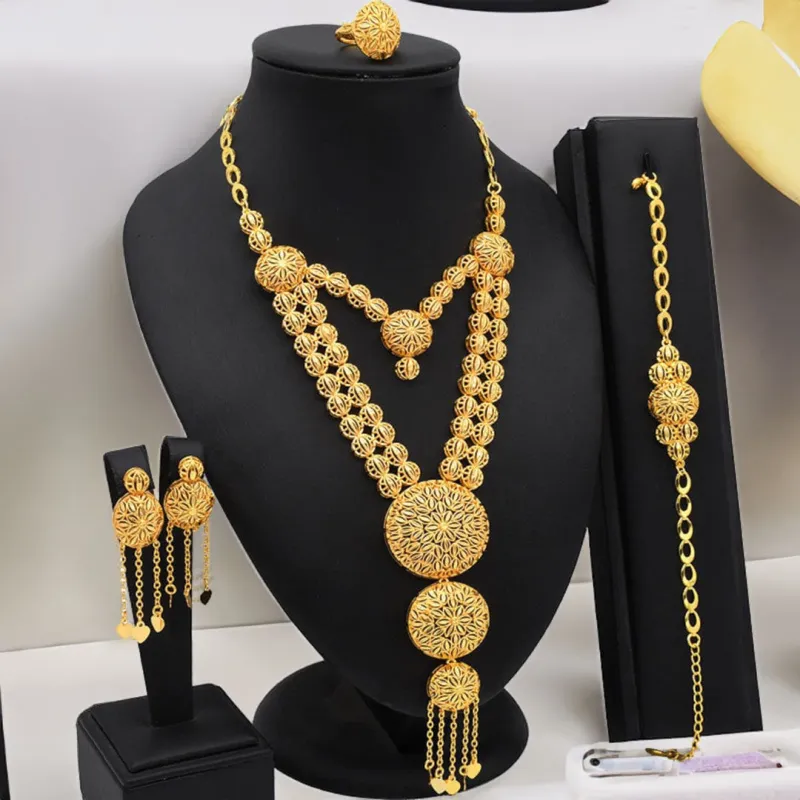
Weighing In: The Gram-First Philosophy Behind Every Gulf Jewelry Purchase

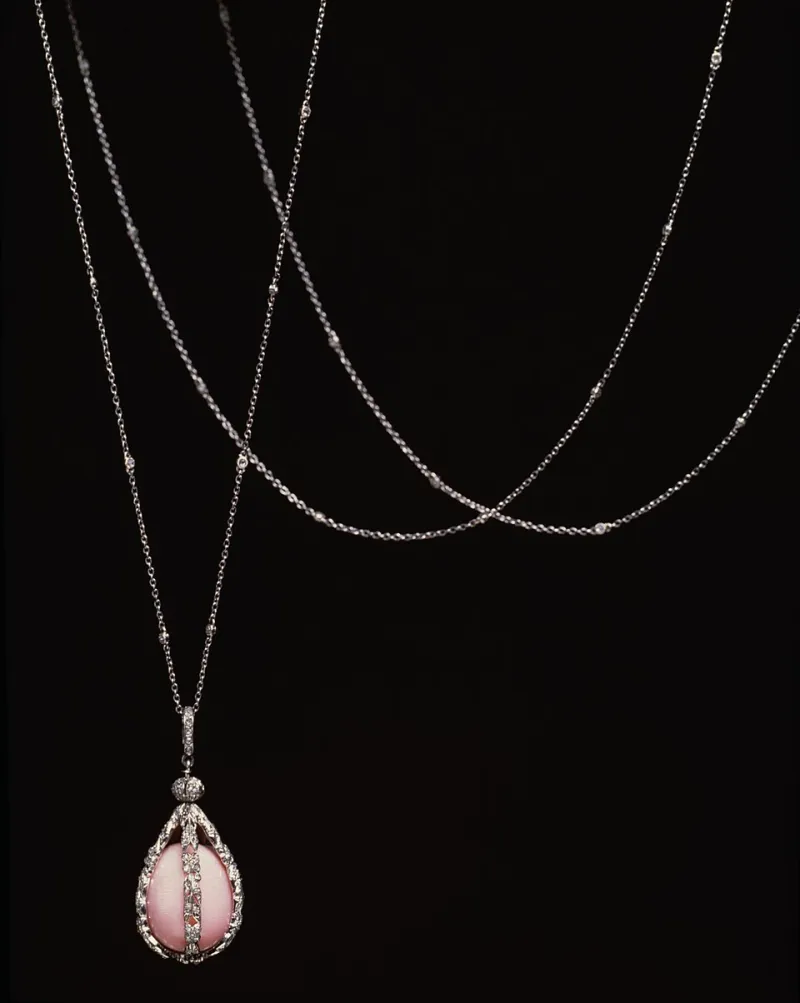
Photo: unknown, Public domain, via Wikimedia Commons
Ask a seasoned Emirati collector what a necklace costs, and she will not name a brand. She will tell you the weight. Forty grams, perhaps—sometimes less, sometimes considerably more—delivered with the same precision a New Yorker might use to quote a zip code. This is not bluntness. It is a financial literacy passed down through generations of traders who understood that gold is, before anything else, a store of value you can wear.
American shoppers, by contrast, are trained to buy the story. We pay for the blue box, the campaign, the boutique on Rodeo Drive. The metal inside is often an afterthought. The Gulf's gram-first philosophy flips that equation entirely—and for collectors willing to do a little arithmetic, it can permanently change how you evaluate every piece you buy, whether it comes from a Dubai atelier or a Madison Avenue vitrine.
The Weight Is the Floor, Not the Price
The first principle is simple: gold has an intrinsic, globally quoted value. On any given day, an ounce of 22-karat gold is worth what the markets say it is worth, whether the metal sits in a vault or is shaped into a palm-frond cuff. This market value—jewelers call it the bullion value—forms the floor of any honest price.
Everything above that floor is a combination of two things: workmanship and margin. A Gulf collector's instinct is to separate those layers mentally, asking how much of the price is metal, how much is hand, and how much is simply overhead dressed up as heritage.
Consider a practical illustration. Suppose gold trades at roughly $2,400 per troy ounce. A 40-gram, 22-karat necklace contains about $3,400 in raw metal value at that moment. In the Dubai gold souk, where pricing is famously transparent, that piece might retail for $3,800 to $4,200—a premium of 12 to 20 percent covering genuine handwork and a modest margin. The identical design, imported and sold through a US luxury retailer, could justifiably—perhaps unjustifiably—reach $7,000 or more. The metal did not change. The math did.
Value Per Gram: A Framework You Can Actually Use
At JADA, we encourage American clients to calculate a figure we call value per gram. The formula is unglamorous but clarifying:
Total price ÷ total gram weight = value per gram.
Then compare that figure to the day's gold price, adjusted for karat. If a 21-karat bracelet carries a value per gram that is 15 percent above its bullion equivalent, you are paying for craftsmanship. If it runs 80 percent above, you are paying for a name—and you should ask whether that name earns it.
A few benchmarks our collectors find useful:
- Under 10 percent premium: Essentially bullion with a bail. Excellent for investment-weight pieces and heirloom foundations.
- 10 to 35 percent: The sweet spot for meaningful handwork—filigree, granulation, hand-engraved Arabic calligraphy, or the dense, sculptural metalwork the Gulf is known for.
- Above 50 percent: Justifiable only when the workmanship is genuinely exceptional, the piece is a limited commission, or the design is signature to a master goldsmith.
The point is not that high premiums are always wrong. It is that you should know which premium you are buying.
When Handwork Earns Its Premium—And When It Doesn't
Not all labor is equal, and our master goldsmiths are the first to say so. Machine-cast pieces stamped with a hand-finished story deserve skepticism. But certain techniques simply cannot be faked at scale.
Genuine hand-granulation—those thousands of tiny gold spheres fused to a surface—can take days per piece. So can traditional Emirati chain work, where each link is drawn, cut, and soldered by hand. When you encounter this level of labor, a premium of 30, 40, even 50 percent over bullion is not markup. It is the wage of a craftsman, fairly paid, for an object that will outlive every trend cycle.
Conversely, be wary of premiums attached to hollow or lightweight construction priced as if it were solid, to designs that are cast en masse and finished by machine, or to branding alone. A famous logo adds no grams. In the Gulf's way of thinking, it adds no value either.
A Different Kind of Luxury Education
There is a quiet confidence in the Gulf collector's approach. She does not need a salesperson to tell her a piece is precious; the scale has already told her. What remains to be judged—the drape of the metal, the fineness of the finish, the singularity of the design—is where true connoisseurship lives.
For American shoppers raised on logo luxury, adopting this lens is liberating. It transforms jewelry buying from an act of faith into an act of evaluation. You begin to see through packaging, through marketing, through the theater of retail, down to the only question that ultimately matters: what am I actually getting, and what is it worth?
Weigh first. Admire second. It is a discipline borrowed from the souks of Dubai—and, we would argue, the most flattering accessory an American collector can wear.