Before the Oil, There Was the Oyster: How the Gulf's Pearl Divers Are Rewriting Modern Dubai Design
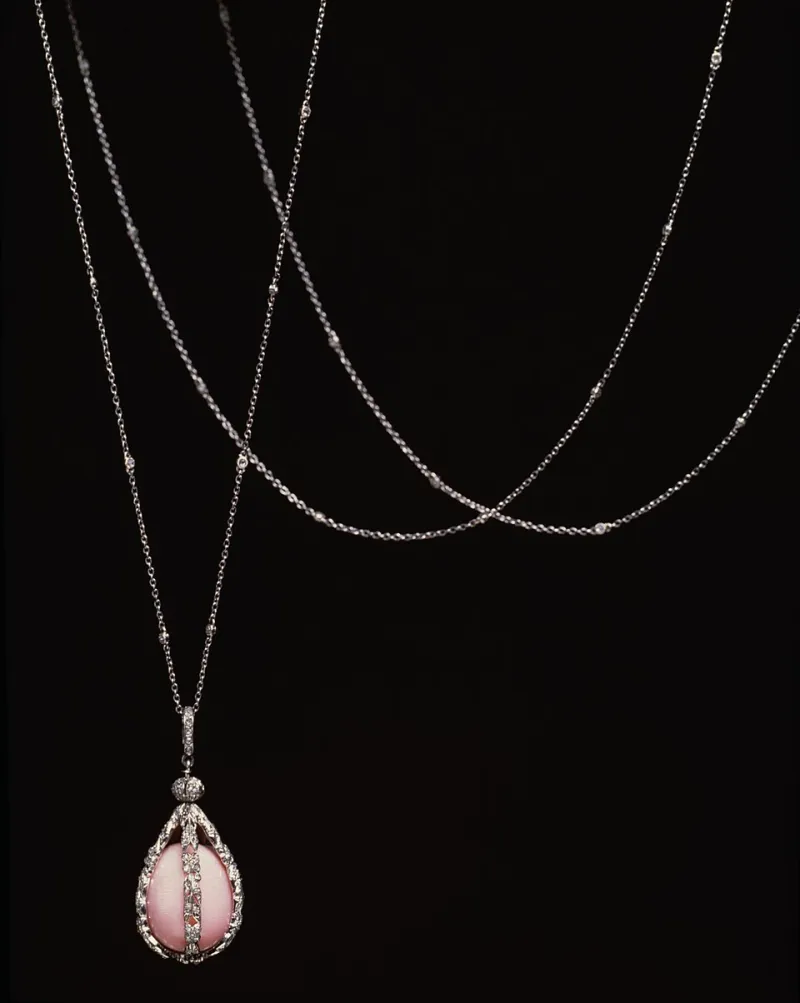
Photo: Tiffany & Co., Public domain, via Wikimedia Commons
Stand on the Corniche in Dubai today, surrounded by glass towers and flagship boutiques, and it is easy to forget that the wealth of this region was once pulled from the sea floor by hand. Before oil, before gold souks, there were pearls—natural, Gulf-harvested, and for centuries the most coveted gems on earth.
At JADA, we believe the most compelling story in modern Gulf jewelry is not the one written in eighteen-karat gold. It is the one written in salt water.
A Fortune That Breathed Underwater
For roughly four thousand years, the pearl banks of the Arabian Gulf supplied the world's most powerful families. Roman emperors, Mughal maharajas, and European royalty all wore pearls that almost certainly began their journey in the waters between Qatar and Oman.
The trade collapsed almost overnight in the early twentieth century, when Japanese cultured pearls flooded the market and the discovery of oil rewrote the region's economy. Within a generation, the diving boats disappeared. But the memory did not.
What makes this heritage remarkable to an American audience accustomed to farm-raised pearls is the sheer improbability of the natural gem. Divers—often working from small boats with no equipment beyond nose clips and weighted stones—might open ten thousand oysters in a season and find only a handful of saleable pearls. Every survivor of that lottery is, quite literally, a miracle of patience.
Keshwah and Barah: A Vocabulary Worth Learning
Among Gulf pearl traders, pearls were never one commodity. They were sorted, named, and graded with a precision that rivaled any modern gemological system—and two terms in particular are enjoying a renaissance among Dubai's contemporary designers.
Keshwah refers to the finest, most lustrous pearls—the ones with a deep, mirror-like sheen that seemed to glow from within. In the old trading houses, a keshwah pearl commanded prices that dwarfed everything around it. When a modern Dubai atelier names a piece after keshwah, it is making a promise about quality.
Barah describes the largest category of trade pearls—round to near-round stones of good quality that formed the backbone of the Gulf's commercial output. Barah pearls were the workhorses of the great natural strands: substantial, luminous, and made to be worn.
Contemporary designers across the Emirates are drawing on this vocabulary not as nostalgia but as a design language. You will find barah-inspired graduated strands reimagined with modern clasps and asymmetric silhouettes, and keshwah-grade solitaires set in minimal yellow gold frames that let the pearl—rather than the setting—carry the drama.
Why Natural Gulf Pearls Command a Premium
For American collectors accustomed to the modest prices of cultured Akoya or freshwater pearls, the market for natural Gulf pearls can come as a shock. Fine examples routinely fetch more per carat than diamonds, and with good reason.
Supply is the obvious factor. Natural pearls are no longer commercially harvested in meaningful quantities anywhere in the world, and the Gulf's historic pearl banks have been largely silent for decades. Every natural pearl in circulation today is a survivor from another era.
But scarcity alone does not explain the devotion. Collectors speak about the difference in nacre depth—the thickness of the pearl's layered surface—which gives natural Gulf pearls a depth of luster that cultured stones, harvested after two or three years rather than five or more, often cannot match. Under a jeweler's loupe, a fine natural pearl shows layer upon layer of growth, like the rings of an ancient tree.
How to Evaluate What You Are Buying
If you are considering a natural or heritage-inspired pearl piece from a Dubai atelier, a few principles will serve you well:
- Ask for provenance in writing. Reputable houses document the origin of natural pearls, often with gemological certification. In an era when authentication matters more than ever, paper is part of the luxury.
- Understand the distinction. A designer piece inspired by Gulf pearl traditions and set with cultured pearls is a legitimate and beautiful thing—but it is not the same investment as a certified natural pearl, and it should be priced accordingly.
- Look at luster under natural light. The finest pearls show a soft, deep glow with subtle overtones—often a faint rose or green cast in Gulf stones—rather than a flat, chalky shine.
- Examine the drill holes. Antique and heritage pearls were often drilled by hand, and those holes tell stories. A respected dealer will show you.
The Emotional Return of the Pearl
Perhaps the most interesting shift we observe among American visitors to Dubai is emotional rather than financial. Many arrive expecting to fall in love with gold—and they do. But it is often the pearl that moves them.
There is something in the story that resonates: a gem formed by chance, harvested by hand, traded across empires, and then nearly lost to history, now finding its way back onto the necks and wrists of a new generation. In a market saturated with logos and mass production, a natural pearl is the ultimate quiet flex—a jewel whose value no one can manufacture.
At JADA, we have watched collectors from New York to Los Angeles choose pearl pieces over more conspicuous purchases, precisely because the pearl carries a narrative that cannot be replicated. It is not a trend. It is a return.
The divers are gone. The pearl banks are quiet. But in the ateliers of modern Dubai, the Gulf's first great treasure is having its second act—and the most discerning buyers in America are paying attention.