Listen Before You Buy: The Gulf Tradition of Hearing Gold That Most American Shoppers Have Never Encountered
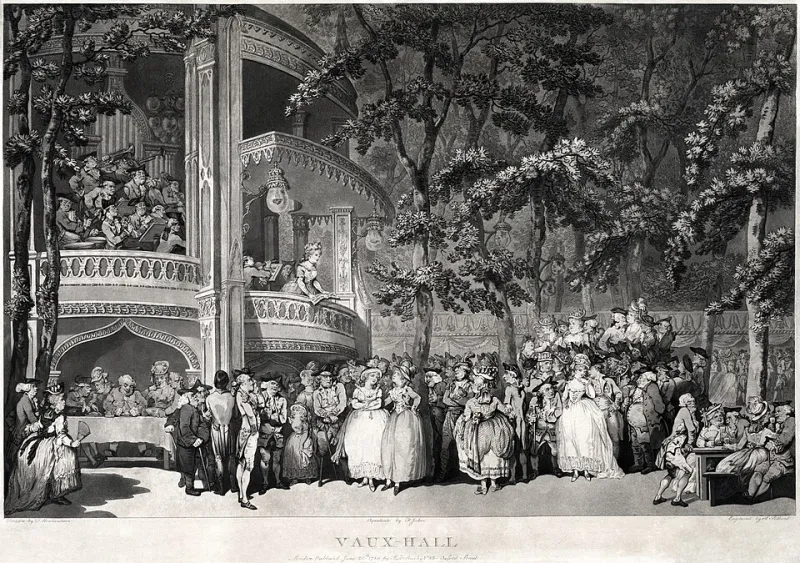
Photo: Thomas Rowlandson / Adam Cuerden, Public domain, via Wikimedia Commons
There is a moment in every serious gold souk in Dubai that a first-time American visitor rarely notices. A seasoned buyer picks up a high-karat bangle, holds it loosely by one edge, and taps it with a fingertip. Then comes the pause—the buyer tilts her head, listening.
To the uninitiated, it looks theatrical. To the goldsmiths of the Gulf, it is simply due diligence. A genuine 22-karat or 24-karat piece does not just look a certain way; it sounds a certain way. Dense, pure gold produces a soft, sustained, almost muffled resonance—a low hum rather than a sharp ring. Plated brass, hollow-fill alloys, and tungsten counterfeits answer with a brittle clink that dies instantly.
At JADA Dubai, our artisans were trained in this tradition long before our pieces ever reached American clients. And as more US collectors buy fine jewelry online—sight unseen, touch never felt—we believe it is time this knowledge traveled west.
Why Sound Matters in High-Karat Gold
Gold is a remarkably dense metal. Its atomic weight gives it acoustic properties that are genuinely difficult to fake: pure gold vibrates slowly and dampens vibration quickly. Jewelers have relied on this for centuries, and modern physics backs them up—acoustic testing is essentially an informal cousin of the resonance-based authentication tools now used in gem labs.
The catch? The test works best on solid, high-karat pieces, which is precisely what Gulf ateliers are known for. American retail jewelry is typically 14K or 18K, alloyed with harder metals that ring brighter and higher. Gulf gold, often 21K to 24K, speaks in a lower register. Once you have heard the difference, it is difficult to unhear.
The Full Ritual: Weight, Warmth, and Fingertips
Sound is only the third act. Before a master buyer in the Deira Gold Souk ever listens to a piece, she conducts two quieter examinations.
Weight in the palm. Gold is heavy—nearly twice as dense as silver and dramatically denser than most counterfeits. A solid 22K cuff should feel almost startling for its size. Buyers learn the expected gram weight of common silhouettes by heart, and a piece that feels too light for its volume is set aside without ceremony.
Temperature against the skin. Gold conducts heat efficiently. Pressed against the wrist or the side of the neck, genuine gold warms to body temperature quickly, while many base-metal imitations linger cold. It is a test any American shopper can perform in a boutique or upon delivery.
The fingertip inspection. Finally, buyers run a thumb across every edge and joint. Hand-finished Gulf goldwork feels smooth, almost liquid—no sharp casting seams, no rough prongs, no granulation that catches. Craftsmanship, in this tradition, is read before it is seen.
Shopping From the US: How to Bring the Ritual Home
Most of our American clients will never tap a bangle in a Dubai souk. That does not mean the ritual is lost. It simply needs to be translated. Here is what we advise:
Request a sound video. When buying high-karat gold online, ask the seller for a short video in which the piece is held by an edge and gently tapped against a wooden surface. Listen for a soft, rounded tone with a brief sustain. A high, tinny clatter warrants questions.
Ask for gram weight and dimensions—always. Density is arithmetic. Divide the weight in grams by the piece's volume estimate, and compare against gold's known density (19.3 g/cm³ for pure gold). Any reputable atelier will provide these figures without hesitation. One that won't has answered your question anyway.
Demand hallmarks and assay documentation. Gulf pieces carry stamps indicating karat fineness—22K, 21K, 916, 875. For significant purchases, request a certificate from an independent assay office, not merely the seller's own attestation.
Feel it on arrival, indoors, in daylight. The moment your piece arrives, perform the palm test and the warmth test yourself. Then examine the finish under natural light with a jeweler's loupe. A serious seller will offer a generous return window precisely because they expect you to.
The Deeper Point: Buying With All Five Senses
There is a philosophy beneath these rituals, and it is one we believe American collectors will find resonant. In the Gulf tradition, a piece of gold is not an image on a screen. It is an object with mass, temperature, and voice. To buy it properly is to know it entirely.
That sensibility stands in refreshing contrast to a US market that often shops jewelry the way one orders sneakers—scrolling, filtering, one-clicking. The collectors who return to us, whether from New York, Houston, or Palm Beach, tend to be those who slow down. They ask for the video. They weigh the piece on a kitchen scale when it arrives. They listen.
Gold, after all, has been whispering its authenticity for thousands of years. The only question is whether we have been taught to hear it.
Our artisans in Dubai would insist you do—before you spend a single dollar.