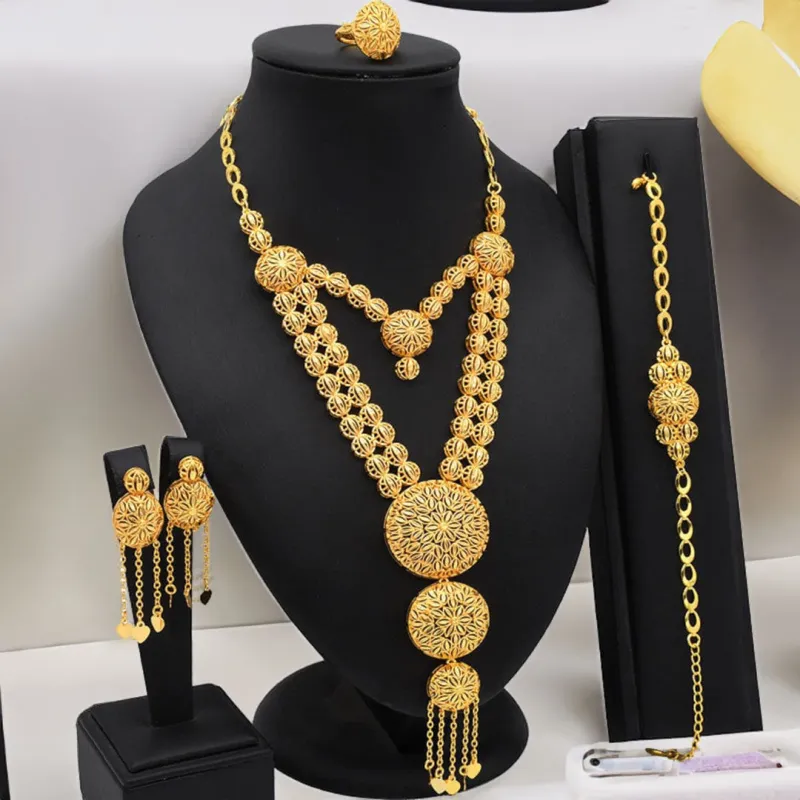
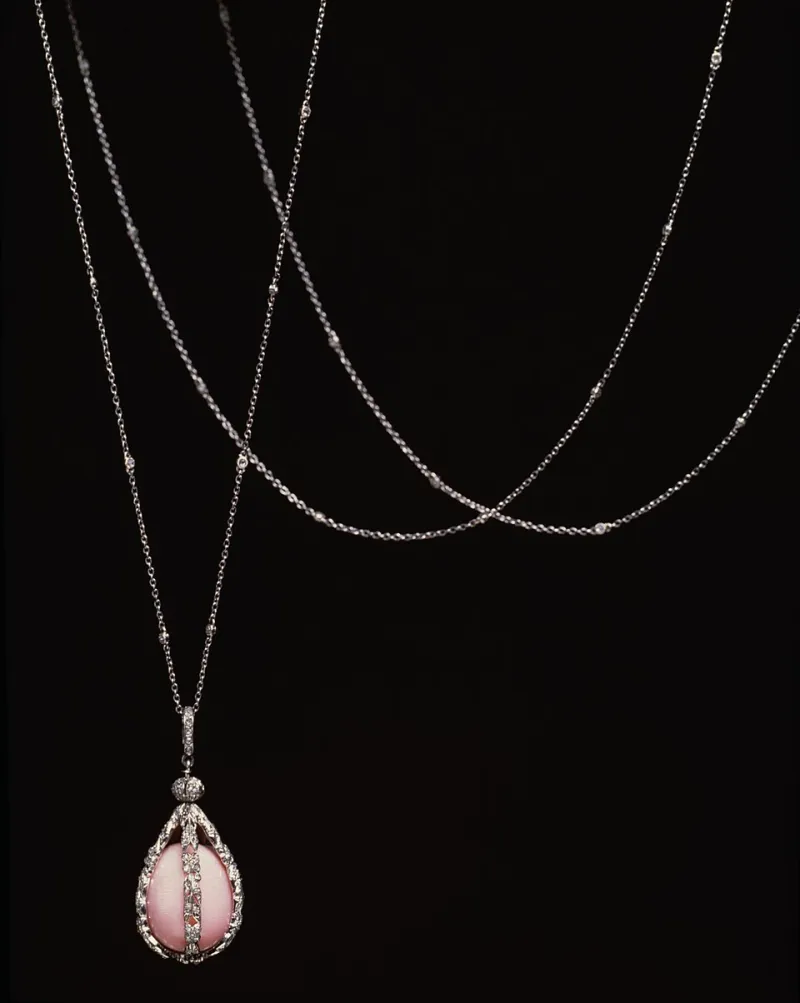
Turn It Over: The Back-of-the-Piece Test Gulf Collectors Run Before Anything Else

Photo: Basile Morin, CC BY-SA 4.0, via Wikimedia Commons
The Back Door
Watch a seasoned Gulf collector approach a tray of necklaces and something counterintuitive happens. The piece is lifted, turned face-down, and held near a lamp. The stones are, for the moment, irrelevant. What is being read is the clasp: its thickness, its finish, the way the tongue seats, whether the solder line is clean or hurried.
This is not eccentricity. It is a discipline built over generations in a region where jewelry is repaired, inherited, resized, and repaired again—where a piece is expected to outlive at least two owners. The front of an object is a design decision. The back is an honest one.
A Field Guide to the Fastenings You Will Meet
The lobster claw. Ubiquitous from the 1990s forward, secure, and easy to operate one-handed. A well-made claw with a properly tensioned spring is a fine closure; a thin, stamped version is the first place costs are cut. Replacement is simple and inexpensive, which is both its virtue and its tell—if a vintage piece has a brand-new claw, ask what happened to the original.
The spring ring. The round clasp of the mid-twentieth century. Charming on a delicate chain, less reassuring on anything heavy, and prone to spring fatigue. A stiff spring ring on an old chain is a good sign; a loose one is a repair waiting to happen.
The box clasp with a figure-eight safety. The benchmark of dress jewelry from the 1930s through the 1970s. Look for a tongue that clicks rather than slides, a snug fit with no lateral play, and a safety catch that closes under tension. A box clasp that rattles will eventually open on its own.
The tongue-and-groove insert. The modern high-jewelry answer, invisible when closed, and usually hand-fitted. When it is right, the piece feels like one continuous object. When it is slightly off, the seam will show under tension—and no amount of polishing fixes it.
The hand-forged hook and eye, or S-hook. Older work, frequently regional, often beautiful. These are artisan closures, made at the bench rather than bought from a findings catalogue, and they are the clearest evidence of hand construction you will find on an antique piece. They also require a safety chain, and any dealer who dismisses that is telling you something.
The screw barrel. Familiar from vintage pearls and older bracelets. Threads wear; check that the two halves meet flush with no gap.
The brooch pin and its catch. A rollover catch suggests earlier manufacture; a modern locking catch, later. Either can be excellent, but the pin stem should be tempered, straight, and firmly seated in its joint.
The screw-back earring. A pre-1930s convention, and a useful dating signal when a seller's story and the hardware disagree.
What the Gulf Reads That the West Skips
The differences are small and cumulative. Gulf buyers look at the solder joints, because a rushed repair leaves a shadow. They look at where the hallmark sits, because a maker confident in the piece marks it in a place that shows. They look at the weight of the hook relative to the weight of the chain—an undersized hook on a heavy chain is a failure in waiting.
And they accept repair as honorable. In a tradition where a grandmother's necklace is shortened for a daughter and lengthened again for a granddaughter, a documented repair is provenance, not damage. A replaced clasp on a fifty-year-old chain is normal. An undocumented replacement is a question.
The Repair Question
Ask it before you fall in love with the front. Can this clasp be serviced? Does the atelier hold compatible findings, or will a replacement require importing a component? If the clasp fails in ten years, who fixes it, and will the fix disturb the setting?
In Dubai, the answer is usually immediate, because the gold district's workshops still make findings by hand and a jeweler will often walk a piece to the bench himself. In the United States, a fine jeweler can usually source a suitable claw or box clasp, but originality is lost in the swap—worth knowing before you buy a piece you intend to hand down.
Three Questions at the Counter
May I see the back? Is the clasp original to the piece, and if not, what was there before? And does the closure match the weight of what it is holding?
That last question is the most practical of the three. A delicate spring ring on a heavy chain, a thin claw on a substantial bracelet, a decorative pin catch on a brooch with real mass—each is a small, avoidable disappointment.
One Caution
Magnetic clasps have their place on casual pieces and none at all on fine jewelry. They release under load, they attract grit, and they offer no evidence of craft. If a piece at a promising price depends on one, that is the price telling you something.
At Home, Too
The habit travels well. Before your next purchase—in a Dubai atelier or on a familiar street at home—turn the piece over, hold it to the light, and open and close the fastening three times. Listen for the click. Feel for play. The front of a jewel is what you will show people. The back is what it will show you.