Heirlooms Over Logos: The Case for Emirati Goldwork in an Age of Mass-Produced Luxury
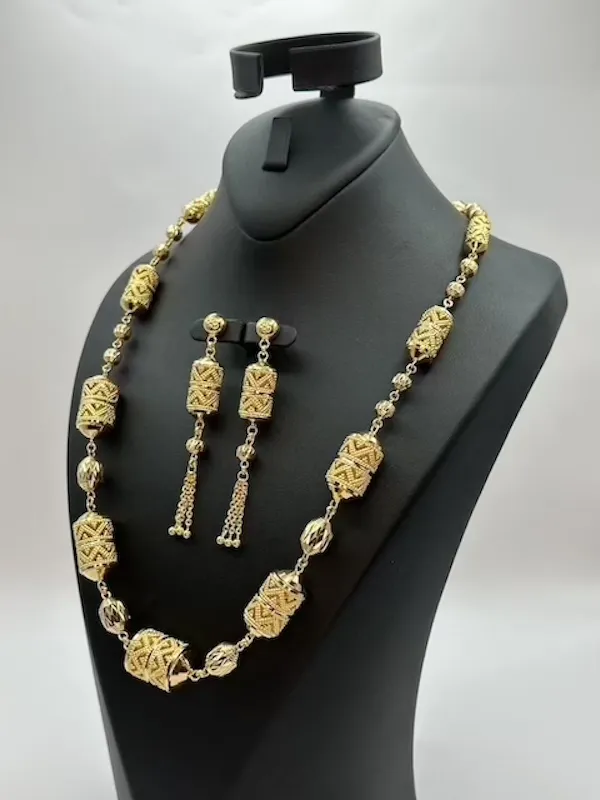
Photo: handcrafted 21 karat gold jewelry filigree luxury atelier close up, via cdn11.bigcommerce.com
Walk down Madison Avenue or Rodeo Drive and you will pass, within a single block, a dozen boutiques selling variations of the same object: a logo-stamped pendant, a machine-finished chain, a design produced ten thousand times over and shipped to every luxury corridor on earth. These pieces photograph beautifully. They hold their marketing. What they rarely hold is meaning—or, increasingly, value.
We write this not as a rival to the great European Houses, whose haute horology and high jewelry remain genuinely extraordinary, but as a corrective to a blind spot in the American luxury conversation. When US collectors think of investment jewelry, they think of Paris, of Geneva, of Florence. They should also be thinking of Dubai.
A Heritage Measured in Karats, Not Campaigns
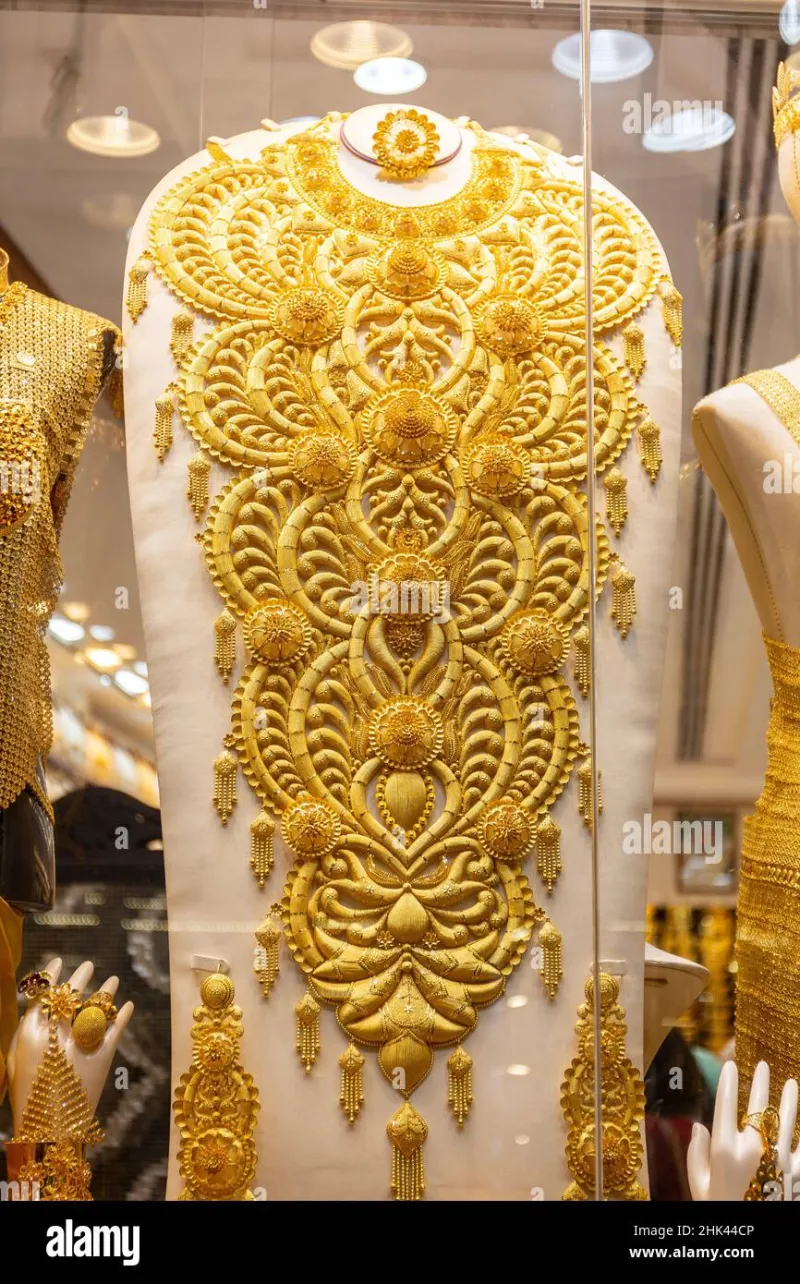
Gold is not an accessory to Emirati culture; it is a foundation of it. Long before Dubai became a global city, gold flowed through the Arabian Peninsula as currency, dowry, and recorded history. The gold souk of Deira has traded for over a century, and the craftsmanship traditions it preserves—dense, high-karat work, hand-drawn wire, intricate filigree passed through generations—are not revivalist. They are continuous.
This matters to the American buyer for a simple reason: high-karat gold, worked by hand, carries material and artisanal substance that machine-produced 14-karat pieces simply cannot match. When you purchase a JADA creation, you are acquiring more grams of purer gold, shaped by human hands, in a tradition where jewelry is expected to outlive its wearer. Not to decorate a season—to anchor a family.
The Math of Meaning: Resale and Heirloom Value
Consider the economics honestly. A logo pendant purchased at full retail typically loses a substantial portion of its value the moment it leaves the boutique, because its price is built on brand premium rather than material worth. Fine gold jewelry, by contrast, is priced close to the intrinsic value of its metal and craftsmanship. Its floor is the gold market itself; its ceiling is the artistry.
And unlike a seasonal designer piece, high-karat gold does not go out of style—it goes out of circulation, becoming rarer. Ask any estate appraiser in New York or Chicago: handcrafted 21- and 22-karat pieces from established Gulf ateliers consistently command attention at auction, precisely because American estates contain so few of them. Scarcity, as any collector knows, is the quiet engine of value.
The heirloom argument is equally pragmatic. A piece designed to be worn across generations—a bold cuff, a marriage of calligraphy and gold—carries provenance, story, and emotional weight. No monogrammed keychain, however expensive, becomes the object a granddaughter fights over.
How to Spot Authentic Desert Luxury from America
The growth of Gulf jewelry's reputation has, inevitably, attracted imitators. Discerning American shoppers should apply four tests:
1. Karat transparency. Authentic Emirati and Dubai-crafted fine jewelry is typically 18k, 21k, or 22k, with hallmarks and certification. If a seller is vague about purity, walk away.
2. Evidence of the hand. Look for subtle irregularities—hammered textures, hand-set stones, hand-drawn filigree. Perfection at the micro level usually indicates a machine.
3. Provenance and atelier accountability. Established Dubai houses stand behind their work with documentation, origin details, and direct artisan relationships. JADA, for instance, built its reputation on precisely this traceability.
4. Design language. Desert luxury speaks in geometry, calligraphy, palm and dune motifs, and architectural form. Generic 'Middle Eastern-inspired' pieces stamped out for tourists are jewelry's equivalent of a souvenir mug.
The Verdict
American collectors have been trained to equate luxury with logos. But the savviest among them—the same ones who diversified into independent ateliers, vintage Cartier, and signed studio jewelry a decade ago—are already looking east. Dubai's goldwork offers what mass luxury increasingly cannot: purity of material, evidence of human skill, cultural depth, and a value proposition grounded in the metal itself.
The mass-produced pendant will be forgotten in a drawer. The hand-forged gold of Dubai will be on someone's hand a century from now, carrying your name in its story.
That is not an accessory. That is an heirloom. And the Americans who recognize it first will own the pieces everyone else wishes they had bought.