After the Doors Close: The Hidden Hours That Turn a Dubai Commission Into an American Heirloom

Photo by Photo by Paul Calvo on Unsplash on Unsplash
At 7:40 p.m. on a Tuesday, the last client of the evening steps out of JADA's private salon and into the evening hum of Dubai. She has just approved the final setting for an eighteen-karat cuff commissioned by her mother in Chicago—a piece meant to mark a sixtieth birthday. The doors close. The lights over the display cases dim. And for most visitors, that would be the end of the story.
It is, in fact, only the beginning.
The Second Shift Nobody Sees
What happens after a private appointment is the part of the luxury business that clients rarely witness and even more rarely understand. Behind a discreet corridor off the main salon, JADA's workshop operates on what the team calls the second shift—the hours when commissions are examined, documented, and prepared for journeys that will take them five time zones away.
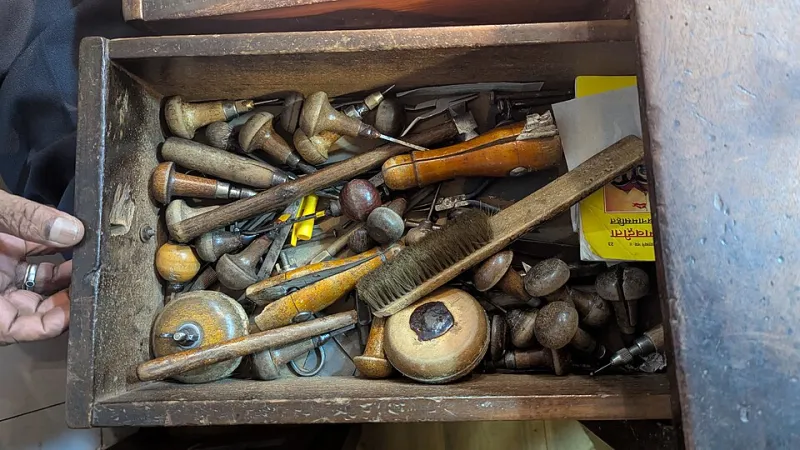
On this particular Tuesday, the Chicago cuff moves first to the restoration bench, where a goldsmith trained in traditional Emirati techniques inspects every millimeter of filigree under magnification. A single prong sits a fraction of a degree off. To an untrained eye, invisible. To a bench jeweler with three decades of Gulf goldwork behind him, unacceptable. The adjustment takes forty minutes. The client will never know it happened—and that, precisely, is the point.
Paperwork as a Form of Craftsmanship
The second stop is less romantic and no less essential: documentation. Every significant piece leaving the atelier for the United States is accompanied by a dossier—metal composition, gemstone provenance, high-resolution imaging, and a formal appraisal prepared to US insurance standards.
American clients are often surprised to learn that the appraisal matters as much as the jewelry itself. A piece uninsured at its true replacement value is a piece at risk; a claim filed with an inadequate valuation can mean recovering a fraction of a piece's worth. JADA's appraisals are drafted with US carriers and independent appraisers in mind, so that a client in Dallas or Boston can hand the dossier to her insurer and have the piece covered before it ever arrives.
The Journey: Hand-Carried, Never Mailed
Then comes the question every American collector eventually asks: how does it get to me?
The answer is simple and old-fashioned. It doesn't get shipped. It travels.
For high-value commissions, a trusted courier—often a member of the atelier's own team—hand-carries the piece in a padded, unmarked case, cleared through customs with full declaration and insured door to door. A flight from Dubai to New York's JFK becomes a twelve-hour vigil: the piece in the cabin, never in the hold, the courier's itinerary coordinated with the client's schedule so that delivery happens within hours of landing, not days.
Some clients arrange to meet the courier themselves. Others have the piece delivered to their attorney, their assistant, or a hotel suite in Manhattan where they happen to be that week. The logistics bend to the client's life, not the reverse.
Resizing Across an Ocean
The relationship does not end at delivery. Rings sent to American clients—especially engagement commissions designed remotely—are sized in consultation with the atelier before they leave, using measurements taken by the client's own local jeweler and verified by JADA's goldsmiths. When a resize is needed after arrival, the piece travels back under the same hand-carried protocol, is adjusted on the original bench by the original maker, and returns within weeks.
It is a slower rhythm than overnight shipping. It is also the difference between owning a product and being in a relationship with an atelier.
Why the Service Is the Luxury
American buyers have been trained to think of luxury as a thing: a stone, a hallmark, a box. Gulf luxury culture has always understood something broader—the idea that what you are truly purchasing is a continuum of care that begins before the first sketch and continues for decades.
When the Chicago cuff arrives in Illinois, the mother who receives it will see a magnificent piece of Emirati goldwork. She will not see the goldsmith's forty minutes under magnification, the appraisal drafted to her insurer's specifications, or the courier who kept it in view across twelve hours and seven thousand miles.
That is as it should be. The finest service, like the finest craftsmanship, is invisible. But it is there—in every seam, every signature, every quiet hour after the doors close.