From the Majlis to the Main Line: Why America's Best-Dressed Hostesses Are Retiring the Cocktail Dress

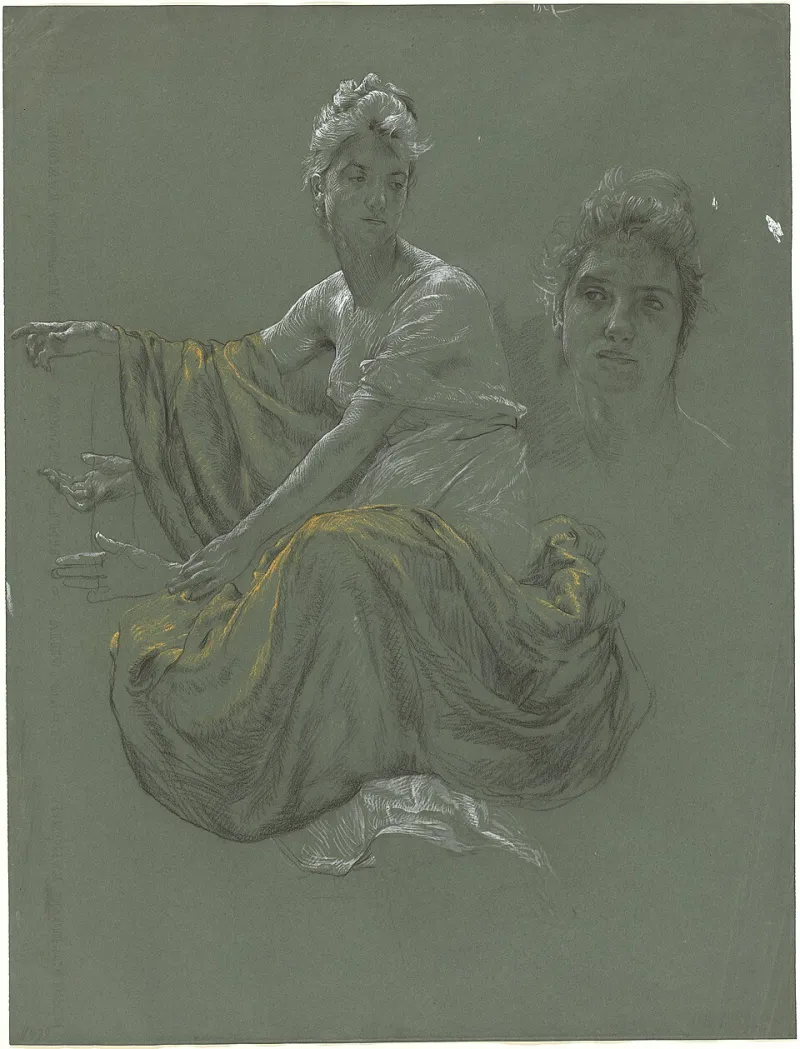
Photo: Jeanne Gougelet (b. 1857), Public domain, via Wikimedia Commons
There is a moment, familiar to anyone who has entertained in Dubai, when the hostess glides into the room. She is not wearing a cocktail dress. She is wearing silk—layers of it, cut generously, moving with her as she pours the coffee. The garment is a caftan, and for centuries it has been the uniform of Gulf hospitality: dignified, sensual, and entirely unbothered by the dictates of Western eveningwear.
Now it is showing up in dining rooms from Charleston to Aspen, and the women wearing it are not playing dress-up. They are making a considered choice about how they want to host—and how they want to feel while doing it.
The End of the Cocktail Dress Consensus
For decades, the American hostess default was a sheath dress: structured, fitted, and honest about its origins in the office. It photographed well. It also constrained. Anyone who has spent four hours leaning over a buffet table in a pencil skirt understands the appeal of a garment designed, as the caftan was, for the act of welcoming guests into one's home.
The majlis—the traditional Gulf reception room where hosts receive guests—shaped the caftan's architecture. It must be beautiful from every angle, because the hostess is always in motion: rising, seated, gesturing, pouring. It must be comfortable for hours, because Gulf hospitality does not operate on a two-drink timeline. And it must carry weight, literally and figuratively, because the fabric itself is a statement of generosity.
American women who entertain seriously have noticed. The stylistic logic is unmistakable: if your evening is built around the pleasure of your guests, why wear clothes built for someone standing still?
Fabric Is the Whole Conversation
Ask JADA's stylists what separates a caftan that reads as luxury from one that reads as loungewear, and the answer arrives before the question ends: the fabric.
"Silk weight is everything," says the studio's lead stylist. "A caftan needs enough body to hold its line when you move. Too light and it clings; too heavy and it becomes a costume. We look for silks in the medium-weight range—substantial enough to drape, fluid enough to breathe."
The second consideration is opacity and sheen. Gulf caftans traditionally balance matte and lustrous surfaces—crepe silk against satin panels, embroidery catching light only where the eye should land. For American rooms, the stylists recommend restraint: one area of embellishment, whether at the neckline, the cuffs, or a vertical panel of hand-work, and let the drape do the rest.
A Four-Season Translation
The caftan's Gulf origins suggest endless summer, but the stylists insist the silhouette travels through an American calendar with only minor adjustments.
Winter — Aspen and the mountain West: Layer a silk caftan over slim trousers or a fine-gauge turtleneck, cinch with a wide belt, and finish with boots. The volume reads as intentional, not summery, against snow and firelight.
Spring — Charleston and the coastal South: A lighter silk in ivory or pale jade, worn open over a slip, suits porch suppers and humid evenings. Keep jewelry to one statement—the ear, not the neck—to let the neckline breathe.
Summer — The Hamptons and coastal California: This is the caftan's homecoming. Full-length, unbelted, in saturated color, worn barefoot or in flat sandals. The mistake to avoid is over-styling; the garment IS the styling.
Autumn — New York and Chicago: Deep jewel tones—oxblood, saffron, ink—paired with closed-toe shoes and heavier gold. A caftan in autumn colors beside a dinner table looks less like resortwear and more like a decision.
The Costume Question
Every stylist we spoke to raised the same concern unprompted: the fear of looking theatrical. Their counsel is consistent.
First, edit the accessories. A caftan is a complete sentence; it does not need an exclamation point of stacked bangles, a turban, and a beaded clutch on top. Choose one heirloom-grade piece—JADA's clients tend toward a single sculptural gold cuff or drop earrings with Gulf metalwork—and stop there.
Second, respect the shoes. A slim sandal or a simple heel keeps the line long. Anything chunky fights the drape.
Third, and most importantly: wear it at home, not just at events. The caftan's authority comes from ease. The women in Dubai who wear it best have worn it a thousand times. American hostesses who treat it as evening armor always look slightly braver than they should. The ones who treat it as comfortable, beautiful clothing—the way it was intended—look like they were born in it.
Why Now
Part of the shift is practical: remote work and at-home entertaining collapsed the boundary between comfort and occasion, and the caftan sits precisely on that line. But the stylists suspect something deeper is at work.
"American women are tired of clothes that ask them to hold their breath," one told us. "The caftan says: sit down, stay late, have another pour. That is a hospitality message. And hospitality, done properly, is the most luxurious thing a person can offer."
In Dubai, we have always known this. It is gratifying to watch the rest of the world set the table accordingly.