Before the Compressor, There Was Cloth: What the Wind Tower Knows About Dressing for a Furnace Summer
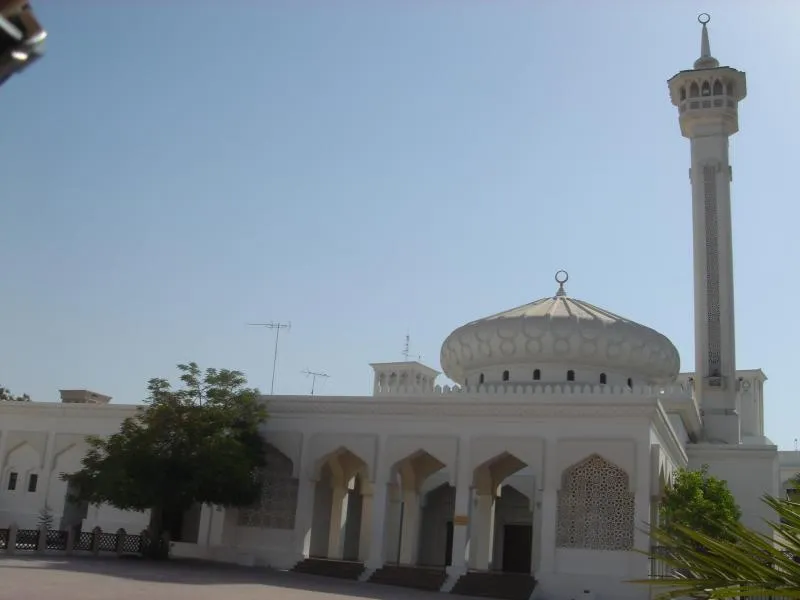
Photo: Jorge Láscar from Australia, CC BY 2.0, via Wikimedia Commons
The Tower That Breathes
Stand in Dubai's Al Fahidi historical neighborhood at midday and you will notice something counterintuitive: it is possible to be comfortable. Not comfortable the way a marble lobby with humming vents is comfortable—comfortable the way a shaded courtyard is comfortable, where air moves, fabric breathes, and the heat feels like a fact of the day rather than an assault.
The reason rises above the rooftops. The barjeel, or wind tower, is the Gulf's original climate technology: a square tower capped with openings facing the prevailing wind, designed to catch every passing breeze and funnel it down through the rooms below. No electricity. No compressor. Just geometry, patience, and an intimate understanding of how air behaves.
For centuries, the people who lived beneath these towers also dressed beneath them—and their clothing was never an afterthought in the cooling system. It was part of it.
We asked Dr. Miriam Haddad, a textile historian who studies pre-modern Gulf dress, and Leila Farsi, senior stylist at JADA Dubai, to explain what the wind tower can teach Americans sweating through another record summer from Houston to Palm Springs.
Principle One: Airflow Is Everything
"The wind tower doesn't fight the heat," Dr. Haddad explains. "It choreographs it. The tower pulls hot air up and out while drawing cooler air down through the courtyard. Traditional dress worked on the same logic—nothing clung, nothing sealed. Every garment created a micro-climate of moving air between cloth and skin."
Leila translates this for the American closet: "The mistake most women make in heat is going tight and minimal—a fitted tank, fitted shorts. It feels logical, but it's the opposite of the wind tower. You've eliminated the airspace. A loose, floor-grazing linen dress in 105 degrees will keep you cooler than a body-conscious cotton blend, full stop."
The modern translation: weightless layers with deliberate volume. A caftan-cut maxi in gauze or handloomed cotton. Wide-leg trousers that move when you do. Sleeve cuffs that billow rather than bind.
Principle Two: The Fiber Is the Furniture
Wind towers were built from local materials chosen precisely because they behaved well in heat—coral stone, gypsum, mangrove poles that expanded and contracted without cracking. Wardrobes followed the same material intelligence.
"Pre-oil Gulf dress relied on fibers with a relationship to the climate," says Dr. Haddad. "Fine cottons, silks woven loose enough to breathe, wools so fine they were cool rather than warm. The Bedouin black goat-hair tent is the famous paradox—black, yet cooler inside than a white canvas tent, because the weave breathes. Color matters less than construction."
Leila's shopping guidance is blunt: "Read the content label before you read the price. Silk habotai, handkerchief linen, voile, fine merino—these are the luxury fibers that perform. A polyester 'linen-look' dress at any price point is a plastic bag with a designer tag. In genuine heat, the fiber is the garment. Everything else is decoration."
Her JADA-approved summer shortlist:
- Handkerchief-weight linen for day—wrinkles are the point, not a flaw
- Loose-weave silk for evening, which cools the skin rather than trapping it
- Cotton voile for layering pieces that weigh almost nothing in a tote
- Fine-gauge open knits that read as polish while functioning as ventilation
Principle Three: Metal Should Not Betray You
Here is where heat dressing becomes jewelry dressing—and where Gulf tradition offers a genuinely practical secret most American shoppers have never considered.
"In the old houses, gold was worn against the skin even in summer," Dr. Haddad notes, "but the pieces were designed for it—high-karat gold, which conducts heat away from the body, and hollow-form bangles that never sat heavy enough to trap warmth. A woman in the Forty-Foot Wind Tower house could wear a full bracelet stack in August."
Leila confirms this is more than romance: "Twenty-two and twenty-four karat gold, which is what we work with at JADA, is softer and more thermally conductive than the 14-karat alloys most Americans wear. It warms to your skin almost instantly and then stops feeling like metal at all. Heavy low-karat statement pieces, by contrast, heat up, hold heat, and leave marks. In July, your jewelry should feel like a second skin, not a heating pad."
Her rules for a furnace-proof jewelry box:
- High-karat gold over dense alloys—lighter on the skin, faster to equalize
- Hollow or slender forms for cuffs and bangles that never trap heat against the wrist
- Drop earrings over studs-and-cuffs combos in peak heat; less contact, same drama
- Save the collar necklaces for climate-controlled evenings—the wind tower principle applies: know which hours belong to the courtyard and which to the cool room
The Shade Discipline
Perhaps the most elegant lesson from the barjeel is its restraint. The tower doesn't run all day at full power; it works with the rhythm of the sun. Traditional Gulf life organized itself around that rhythm—errands at dawn, the midday hours in the coolest room, social life after sunset.
"Dress for the hour, not the day," Leila advises. "The light linen caftan and quiet gold for the morning. The layered silk and the statement earring for after dark. Women who try to wear one heat-proof outfit for twelve hours end up either overdressed at noon or underdressed at night. The wind tower never tried to do everything at once."
Dr. Haddad puts it best: "The wind tower is a philosophy, not a machine. It says: the climate is not your enemy if you design for it. The same is true of a wardrobe. Glamour in the heat was never about enduring discomfort beautifully. It was about being intelligent enough not to be uncomfortable in the first place."
That, in the end, is the Gulf's quiet luxury: not what you wear, but how thoughtfully it lets the air move.