Five Questions Before the Splurge: What Gulf Collectors Know About Buying Less, Better
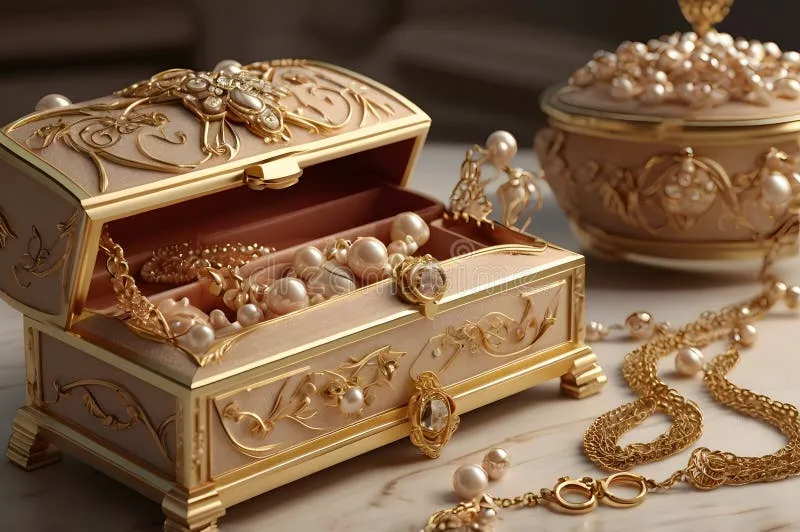
Photo: elegant woman organizing luxury gold jewelry box close up, via thumbs.dreamstime.com
There is a particular discipline to the way Dubai's most stylish women acquire jewelry. It is not austerity, and it is certainly not minimalism for its own sake. It is curation with conviction—the belief that a jewelry box should read like a memoir, not a receipt book. As American shoppers grow wary of logo fatigue and fast-luxury churn, this Gulf approach feels less like a foreign concept and more like a homecoming.
So before your next significant purchase, we suggest an audit. Not of your closet—of your intentions. Five questions, borrowed from the quiet luxury playbook of the Emirates.
1. Will This Piece Survive the Decade, Not Just the Season?
Trend cycles in the US move at the speed of a TikTok sound. Gulf collectors operate on a different clock. The question is not whether a piece photographs well today, but whether it will feel intentional in 2035.
A sculptural 21-karat gold cuff in the Emirati tradition passes easily. A rhinestone-laden statement earring riding this season's maximalist wave does not. If you find yourself justifying a purchase with the word "right now," pause.
2. Does It Carry a Story Worth Retelling?
At dinner parties from Manhattan to Palm Beach, the most compelling pieces in the room are rarely the most expensive. They are the ones with provenance: the hand-engraved bangle from a Dubai atelier, the Najdi-inspired pendant whose motifs trace back generations.
Ask yourself: when someone compliments this piece, will you have something genuine to say? If the answer is "it was on sale," the piece fails the test—regardless of price.
3. Is It Crafted or Merely Assembled?
Mass production has flattened luxury. The antidote is attention to handwork: hand-set stones, hand-finished gold, settings shaped by a goldsmith rather than a machine. Gulf jewelry houses, many rooted in generations of goldwork tradition, treat craftsmanship as non-negotiable.
Run your fingers along the underside of a piece. Feel for tool marks, for evidence of a human hand. Machine perfection is common; hand precision is rare, and rarity is the point.
4. Does It Earn Its Place Among What You Already Own?
The finest collections are dialogues, not warehouses. A new piece should converse with what you own—elevating an existing chain when layered, balancing a beloved ring when worn on the same hand.
Hold the candidate up against your three most-worn pieces. Does it belong in that conversation? If it will live in a pouch at the back of a drawer, it was never truly yours to begin with.
5. Would You Buy It Again at Full Price?
The final filter is the most honest. Strip away the discount, the urgency, the sales associate's encouragement. At full retail, today, again—yes or no?
Gulf collectors rarely buy on impulse because they rarely buy on discount. The habit of paying fair price for fair work sharpens judgment in a way sale-shopping never will.
The Verdict
Pieces that pass all five questions deserve a place in your collection. Pieces that pass three are worth a second visit. Pieces that pass fewer than that were never purchases—only temptations.
Download the checklist: We have condensed these five questions into a printable one-page audit you can keep in your phone's notes or tuck into your jewelry case. Bring it on your next buying trip—whether that means Madison Avenue, or, as we would humbly suggest, a boutique in Dubai.
Buy fewer, finer things. The Gulf has been quietly proving the wisdom of that philosophy for generations.